


LAWYERS IN ISTANBUL

ISTANBUL ARBITRATION LAWYER
FILE A LAWSUIT IN ISTANBUL

TURKISH CITIZENSHIP BY INVESTMENT
MESSAGE FROM THE CHAIRWOMAN
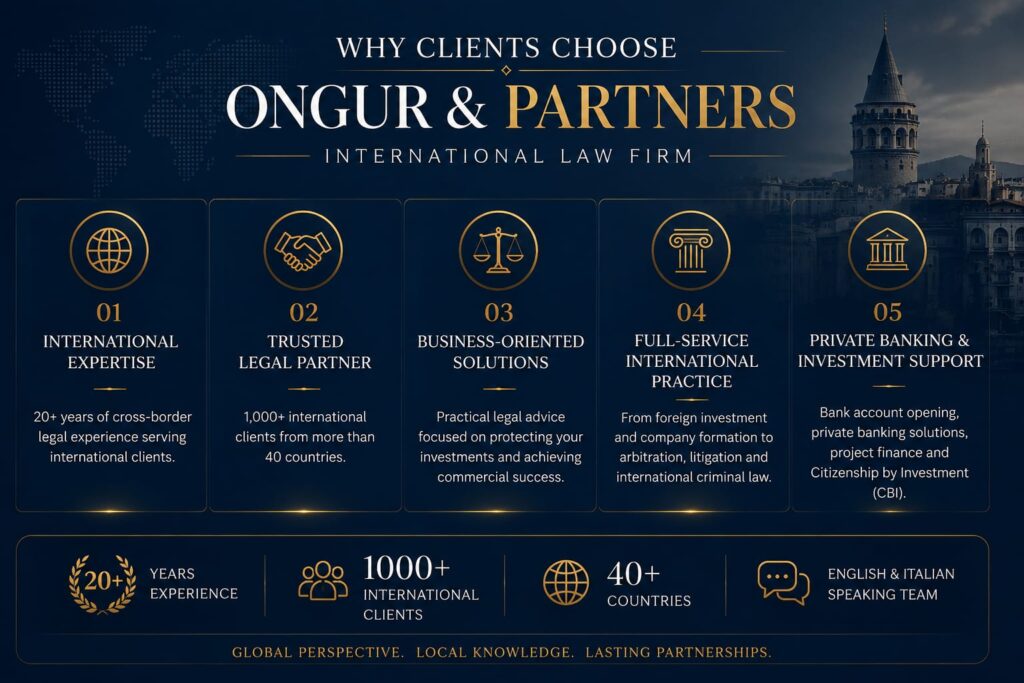
At ONGUR & PARTNERS, we are proud to serve as a trusted legal partner for international clients who seek excellence, reliability, and strategic insight in their legal matters in Turkey. Our team of highly skilled and multilingual international lawyers in Turkey has extensive experience advising foreign investors, multinational companies, and government institutions on cross-border legal issues, international contracts, arbitration, and complex corporate matters.
Our success is built on professionalism, integrity, and a deep understanding of both Turkish law and foreign legal systems. We provide tailor-made legal solutions for our clients, whether they are entering the Turkish market, forming a company, investing in real estate, or managing international disputes. At ONGUR & PARTNERS, we believe in building long-term relationships that go beyond legal services—many of our clients become lifelong friends. We would be honored to welcome you into the ONGUR & PARTNERS legal family.
Professional Legal Consultancy in Turkey: Navigating the Market with an Istanbul Lawyer
Istanbul serves as the bridge between Europe and Asia, acting as a massive hub for international trade, maritime logistics, and foreign investment.
However, navigating the Turkish legal system requires more than just general knowledge; it demands the precision of a dedicated Istanbul lawyer. Whether you are an individual looking for residency or a multinational corporation entering the Turkish market, the complexity of local regulations makes professional legal support a necessity rather than an option.
The Importance of Local Expertise
Choosing a reputable Istanbul law firm is the most critical decision for any foreign investor. The Turkish legal landscape is characterized by frequent updates in legislation, particularly in sectors like tax law, data protection (KVKK), and citizenship by investment.An Istanbul lawyer provides the cultural and procedural bridge needed to translate these complex rules into actionable business strategies.
At a premier Istanbul law firm, the focus goes beyond simple litigation. It involves preventive law—identifying potential risks in contracts or employment agreements before they escalate into costly court battles. This proactive approach to legal support ensures that your operations remain compliant with both local statutes and international treaties.
Comprehensive Services at an Istanbul Law Office A full-service Istanbul law firm typically offers a wide array of specialized services designed to protect your interests:Corporate and Commercial Law: Every Istanbul lawyer at a top-tier firm understands that time is money. They assist in company formation, mergers and acquisitions (M&A), and drafting complex shareholder agreements.
Real Estate and Construction: Given Istanbul’s booming property market, an Istanbul law office is essential for conducting due diligence, managing title deed transfers, and navigating zoning regulations.
Dispute Resolution and Arbitration: If a conflict arises, an Istanbul lawyer provides robust representation in Turkish courts or through international arbitration centers, ensuring that your rights are defended vigorously.Foreigners’ Law: Obtaining legal support for work permits, residence visas, and Turkish citizenship by investment is a core competency of any international-facing Istanbul law firm.
Conclusion
In a city as dynamic as Istanbul, legal challenges can arise as quickly as opportunities. Partnering with an experienced Istanbul lawyer allows you to navigate these challenges with confidence. From the initial consultation at an Istanbul law office to the final execution of a commercial deal, having a reliable Istanbul law firm by your side ensures that you have the legal support necessary to succeed in the Turkish Republic’s most competitive environment.Av. Dr. Arzu ONGUR, Chairwoman


ONGUR & PARTNERS is an active member of several prestigious legal and business institutions:
- International Bar Association (IBA)
- Turkish Bar Union (TBB)
- Ankara Bar Association (ABA)
- Italian Chamber of Commerce and Industry (CCIIST)
- International Law and Investment Association (ILIDA)


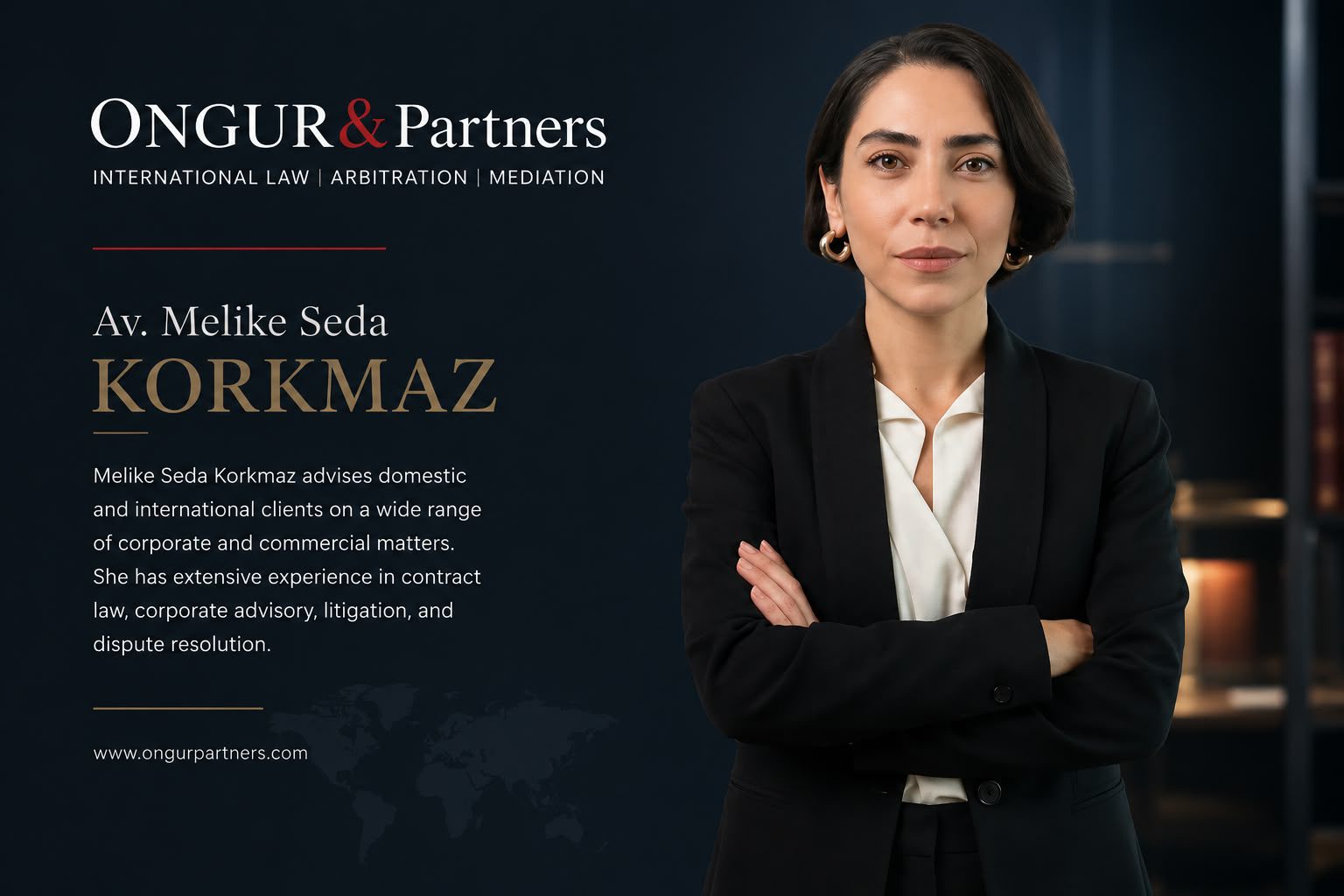
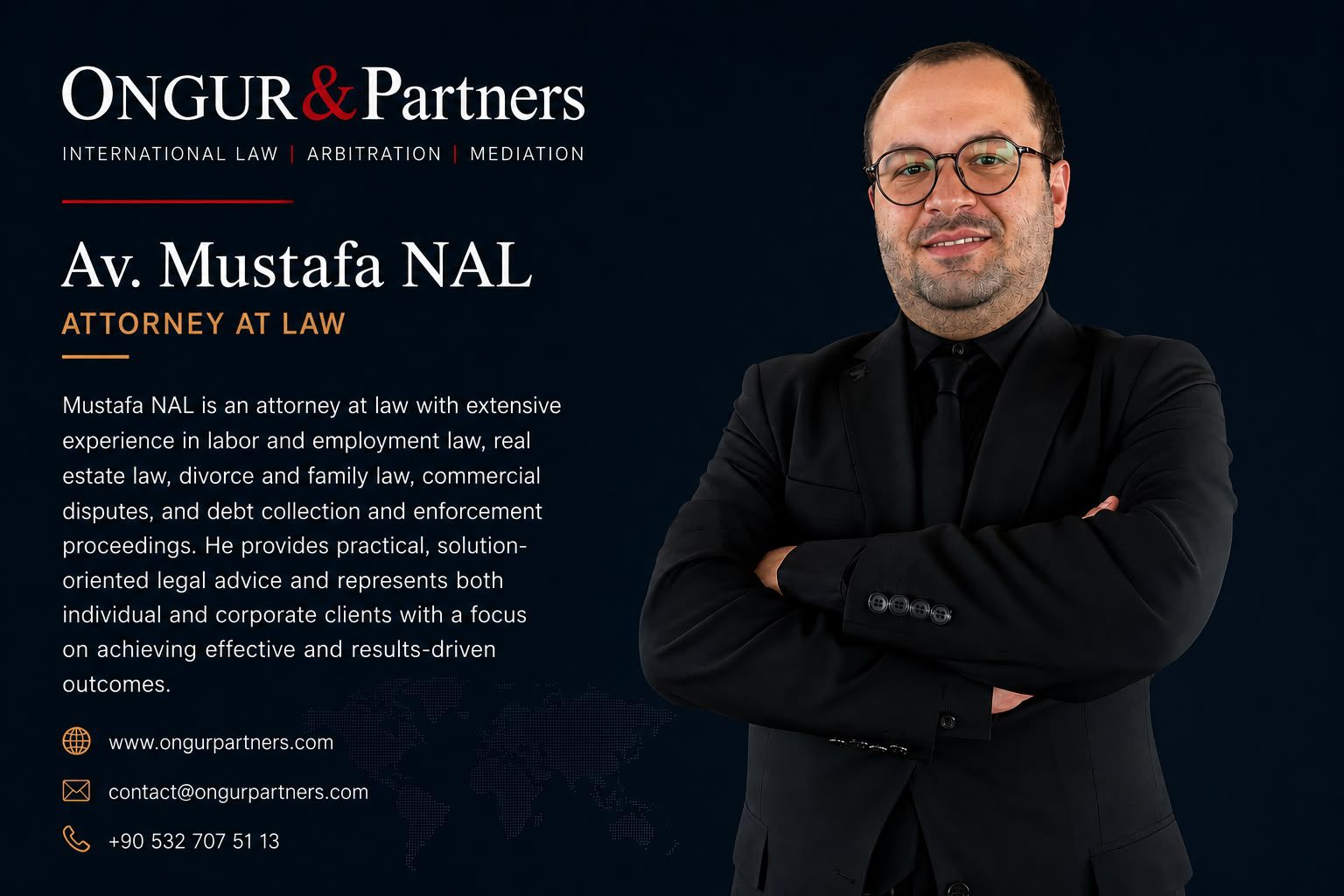
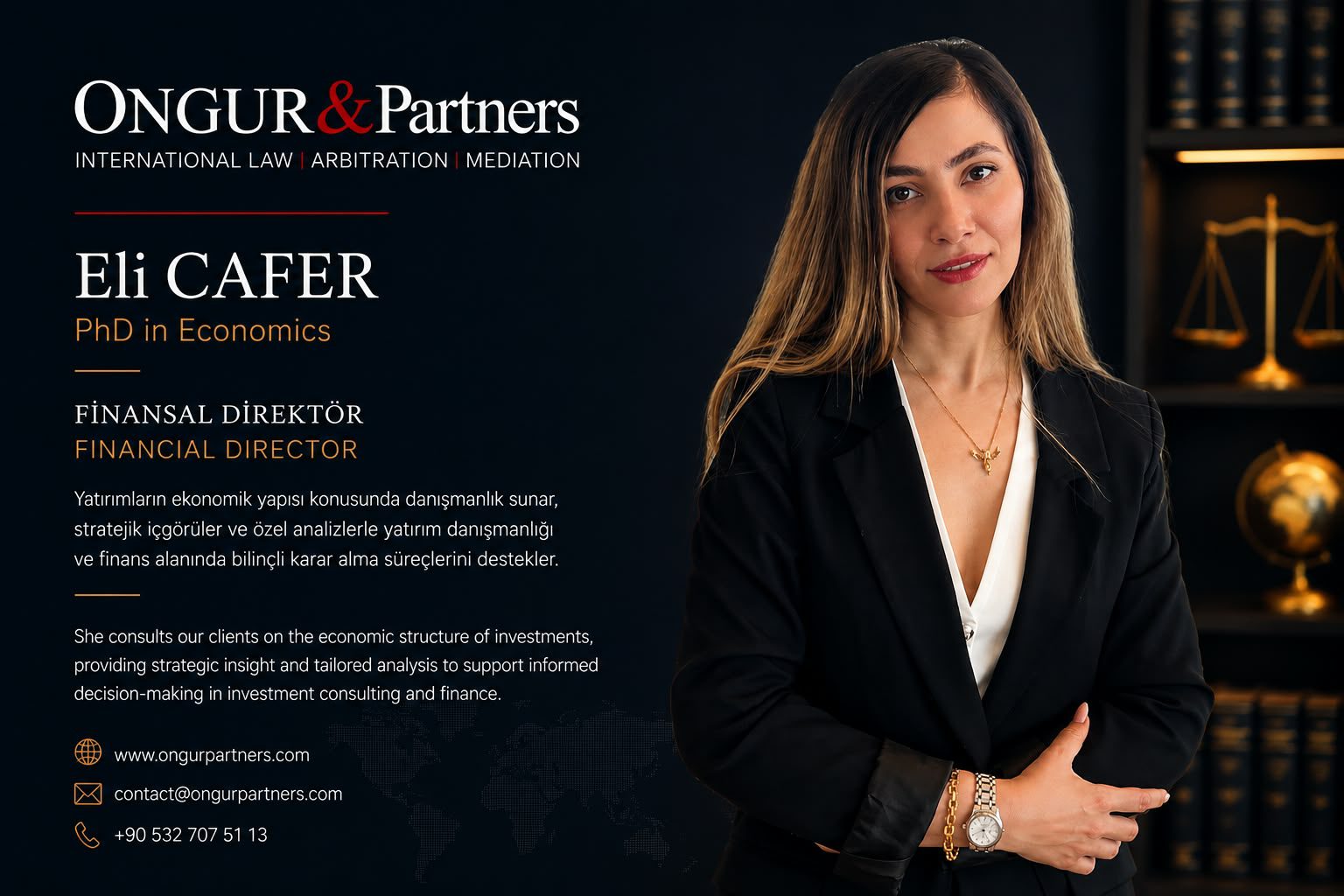
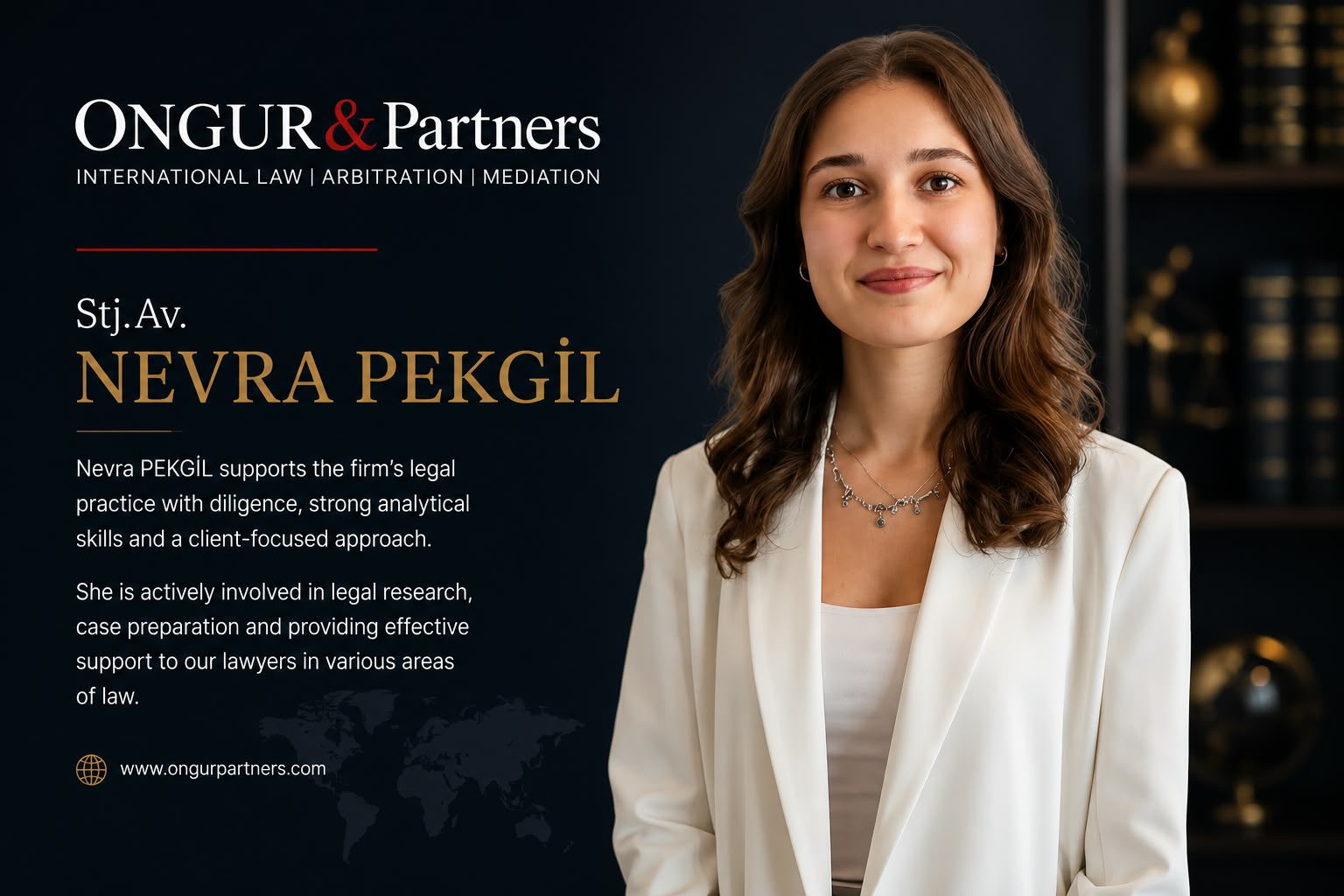
OUR TEAM
Trusted Legal Expertise in Turkey
Take the first step toward protecting your interests and building a secure future. The experienced team at Ongur & Partners is here to guide you through every legal matter with confidence, precision, and strategic insight. Discover how the right legal partnership can strengthen your path forward.
[email protected]
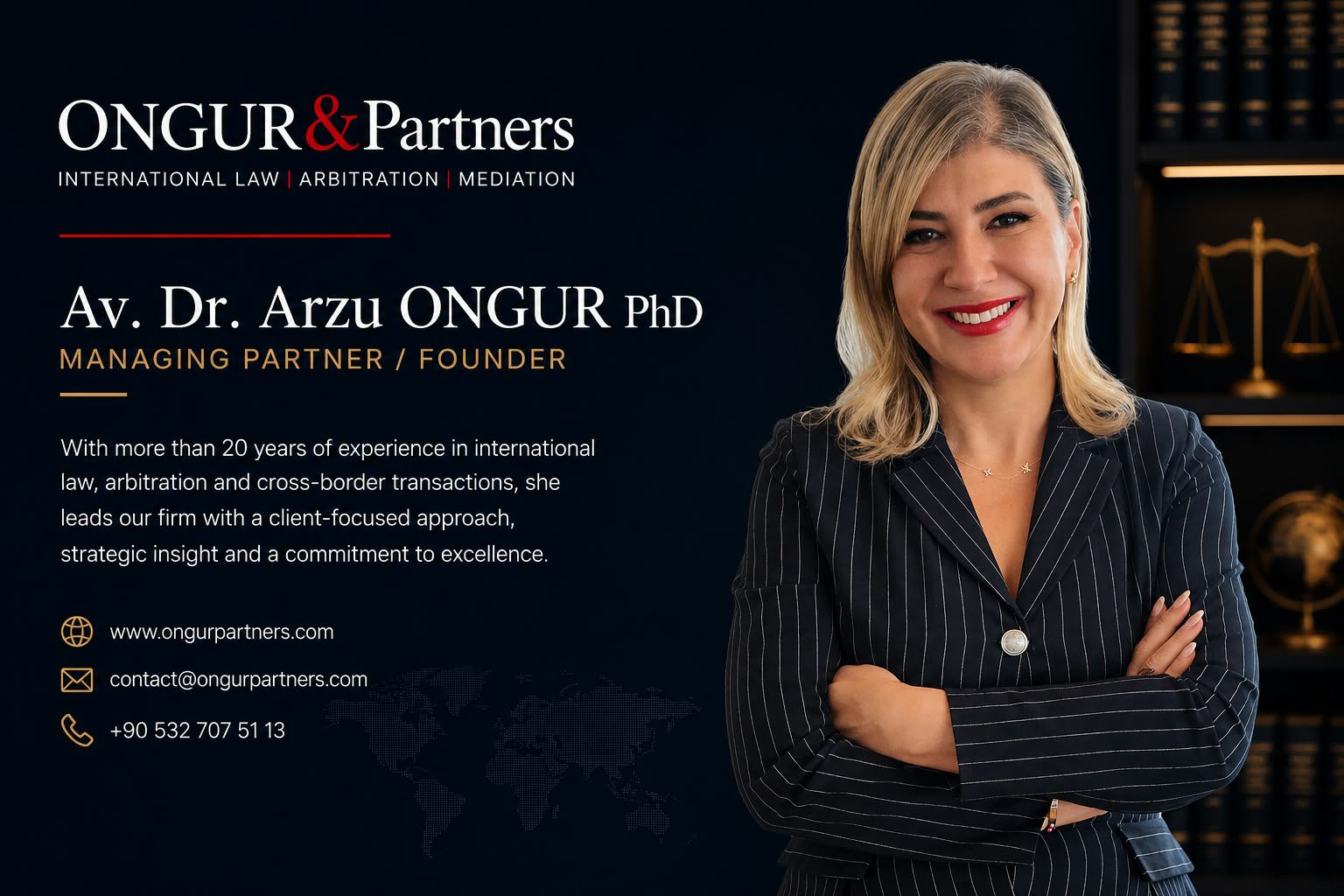
Avv. Dr. Arzu ONGUR, Ph.D.
Managing Partner | Chairwoman TURKINVEST International A.Ş. | International Arbitration & Investment Law Expert
Key Roles
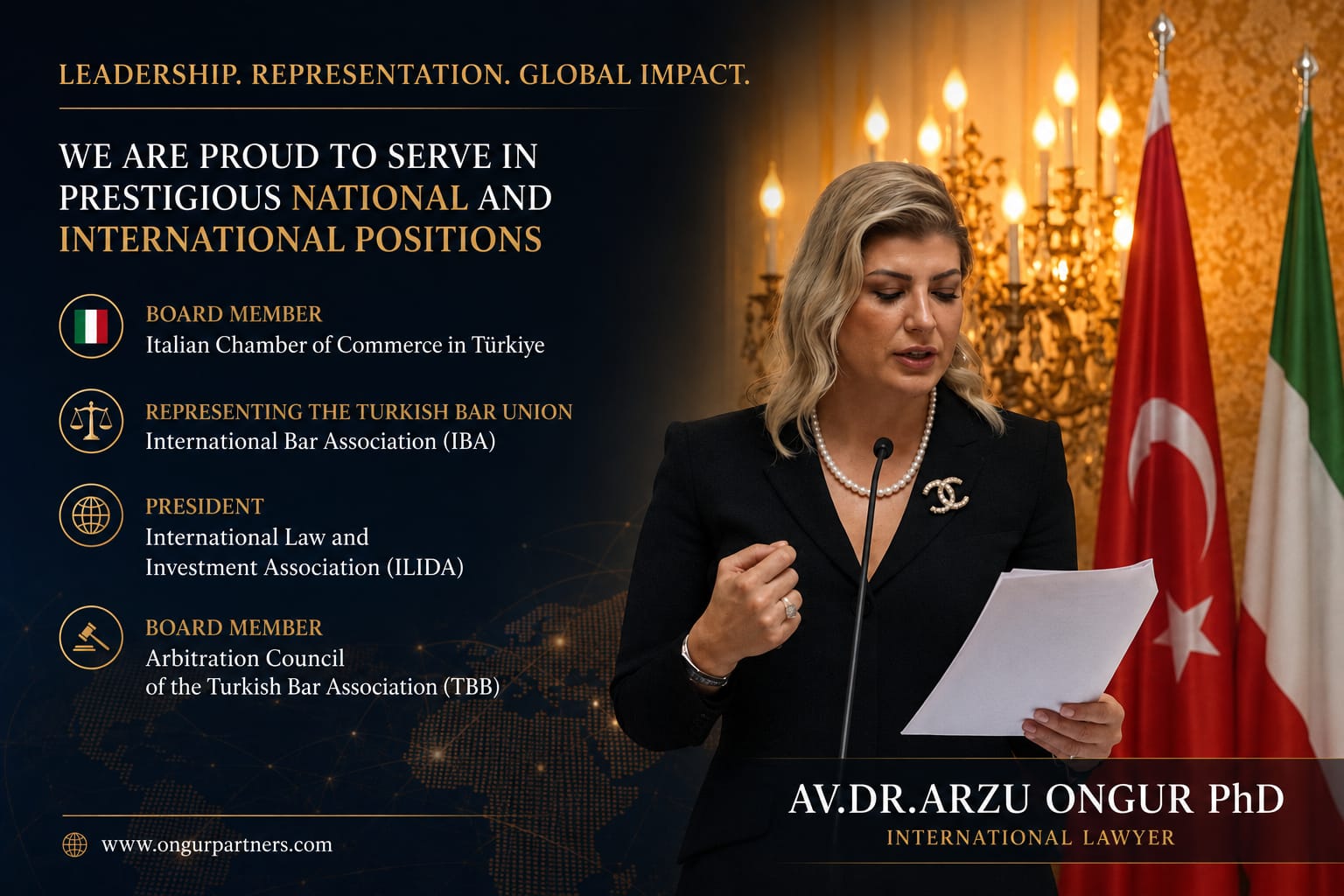
- Managing Partner – ONGUR & PARTNERS International Law Office
Chairwoman – TURKINVEST International A.Ş. - President – International Law Investments Association (ILIDA)
- Board Member – CCIIST Italian Chamber of Commerce and Industries
- Board Member – Turkish Bar Union Arbitration Centre
- Representative – Turkish Bar Union at the International Bar Association (IBA)
Profile Summary
Dr. Arzu ONGUR is a leading international lawyer based in Istanbul, Turkey, with nearly 20 years of experience in cross-border legal and investment matters.
As Managing Partner of ONGUR & PARTNERS, she has represented over 500 international clients in complex disputes, including:
- International arbitration
- Foreign direct investment (FDI)
- Competition and antitrust law
- Commercial disputes
She also serves as Chairwoman of TURKINVEST International A.Ş., President of ILIDA, Board Member of CCIIST and the Turkish Bar Union Arbitration Center, and represents the Turkish Bar at the IBA.
A respected legal scholar and practitioner, she is the author of a book and multiple international articles on FDI, arbitration, international legal services, and competition law in Turkey.
Education
- Ph.D. in Law – Ankara University, Faculty of Law
- Focus: Competition Law and its International Framework
- Analyzed Turkish competition law in the context of EU and global regulatory standards
- Master’s Degree in International Law – University of Bologna, Italy
- Specialization: Public international law, European law, dispute resolution
- Instruction in English and Italian
- Master’s Degree – Collegio Europeo di Parma, Italy
- Scholarship recipient
- Multidisciplinary focus: EU legal and institutional frameworks, economic law, policy
- LL.B. – Ankara University, Faculty of Law
Courses: Civil law, public international law, commercial law, international private law
- Professional Training in Arbitration & ADR – Washington, D.C. & Florence, Italy
- Certified training in international commercial arbitration, mediation, and cross-border enforcement
Areas of Expertise
- International Arbitration – Milano Arbitration Center, LCIA, ICSID, ICC, UNCITRAL
- Foreign Direct Investment Law in Turkey
- Competition & Antitrust Law
- Public Procurement & Government Contracts
- Energy, Defense & Aviation Law
- International Commercial Contracts
- Company Formation & Cross-Border Transactions
- Real Estate & Investment Licensing in Turkey
Languages
- English – Fluent
- Italian – Fluent
- Turkish – Native
- Sworn Translator – Certified in all three languages
Trusted Legal Expertise in Turkey
Take the first step toward protecting your interests and building a secure future. The experienced team at Ongur & Partners is here to guide you through every legal matter with confidence, precision, and strategic insight. Discover how the right legal partnership can strengthen your path forward.
[email protected]
English Speaking Lawyer in Turkey
Finding a reliable English speaking lawyer in Istanbul or overall Turkey is essential for foreign individuals and companies seeking legal clarity and effective representation in Türkiye. At Ongur Partners, we understand that legal certainty begins with clear communication.
Our clients benefit from working directly with a team of English-speaking lawyers in Istanbul, eliminating the need for intermediaries or translators. This direct communication allows clients to fully understand their legal position, evaluate risks accurately, and make informed decisions—ultimately increasing the likelihood of legal success.
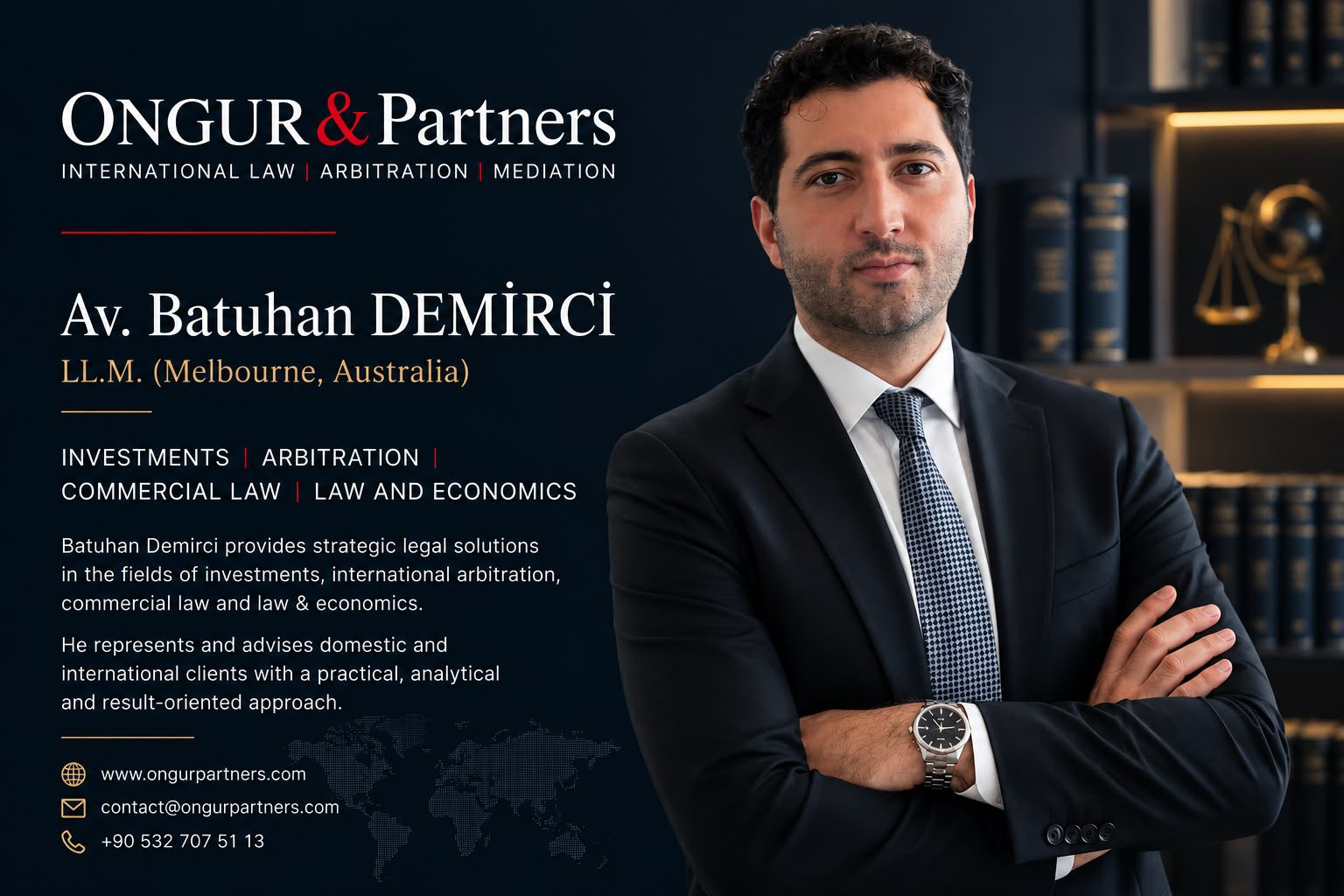
At Ongur Partners, our legal team consists of internationally trained lawyers who have completed their LL.M. degrees abroad and are fully proficient in legal English. In addition, we provide seamless communication in both English and Italian, ensuring that our clients can express themselves clearly and confidently throughout every stage of their legal process.
Being able to communicate directly with your lawyer is not just a convenience—it is a strategic advantage. It strengthens trust, minimizes misunderstandings, and enables a more precise and effective legal strategy.
Whether you are an investor, entrepreneur, or individual seeking legal support in Türkiye, working with an experienced English speaking lawyer in Istanbul ensures that your rights are clearly understood and strongly protected.
At Ongur Partners, we combine international expertise with local legal knowledge to provide a truly client-focused service—without language barriers
How to Hire the Best Lawyer in Turkey
Choosing the right legal partner is one of the most critical decisions for individuals and companies operating in Türkiye. Whether you are making an investment, establishing a business, or managing a dispute, working with the best lawyer in Turkey can significantly impact your outcome.
1. Look for International Experience
When hiring a lawyer in Turkey, especially as a foreign client, international experience is essential. Lawyers who have studied abroad or worked with cross-border clients are better equipped to understand global standards, expectations, and legal strategies.
An internationally trained lawyer not only knows Turkish law but also understands how to bridge legal systems—an important advantage in complex transactions.
2. Prioritize Clear Communication
Legal matters are complex. Clear and direct communication with your lawyer is crucial.
Working with an English speaking lawyer in Turkey allows you to:
- Fully understand your legal position
- Ask the right questions
- Make informed decisions without relying on translators
Miscommunication can lead to costly mistakes. Direct communication, on the other hand, increases efficiency and confidence throughout the process.
3. Evaluate Expertise and Specialization
The “best lawyer” is not a general concept—it depends on your specific needs.
Make sure your lawyer has proven experience in the relevant area, such as:
- Corporate and investment law
- International arbitration
- Real estate transactions
- Dispute resolution
A specialized lawyer will provide more precise strategies and better results.
4. Check Track Record and Reputation
A strong reputation is built on consistent results and client trust.
Before hiring a lawyer in Turkey, consider:
Previous client experience
Complexity of handled cases
Ability to manage international matters
Law firms with a strong portfolio in cross-border work are often better suited for foreign clients.
5. Consider Multilingual Capability
For international clients, language is not just a convenience—it is a necessity.
Working with a law firm that offers services in English and other languages such as Italian ensures:
- Faster communication
- Better understanding of legal nuances
- A smoother overall experience
It also eliminates the need for third-party translators, reducing both time and risk.
6. Assess Strategic Approach, Not Just Legal Knowledge
The best lawyers do more than explain the law—they provide strategy.
A strong legal advisor will:
- Anticipate risks
- Offer practical solutions
- Align legal advice with your business or personal goals
This strategic perspective is particularly important in investment and dispute scenarios.
7. Choose a Firm That Understands Foreign Clients
Foreign investors and individuals face unique challenges in Türkiye. Legal, cultural, and procedural differences can create uncertainty.
A law firm experienced in working with international clients will:
- Simplify complex procedures
- Provide clear guidance
- Act as a trusted partner, not just a service provider
Why Ongur Partners?
At Ongur Partners, we provide international-standard legal services tailored to foreign clients.
Our team consists of lawyers who have completed their LL.M. degrees abroad and are fluent in legal English and Italian, enabling direct and effective communication without the need for interpreters.
We combine deep knowledge of Turkish law with a global perspective, helping our clients navigate complex legal matters with clarity, confidence, and strategic insight.
Final Thoughts
Hiring the best lawyer in Turkey is not just about credentials—it is about finding a trusted advisor who understands your needs, communicates clearly, and delivers strategic value.
For foreign clients, this means choosing a law firm that offers international experience, multilingual capability, and a strong track record in cross-border matters.
Company Formation in Turkey.
Company Formation in Turkey. Turkey has long been a prime location for business ventures due to its strategic position, vibrant economy, and access to global markets. Whether you’re an entrepreneur looking to expand your operations into new territory or an investor seeking opportunities, understanding the process of company formation in Turkey is crucial. In this guide, we’ll take a detailed look at the process of setting up a business in Turkey, the associated costs, the role of company formation agents, and other essential considerations.
Company formation in Turkey is a relatively straightforward process, but it requires a thorough understanding of the legal framework and local regulations. The Turkish government has made several reforms in recent years to attract foreign investors, providing a more business-friendly environment. The most common business structures for foreigners are limited liability companies (LLCs) and joint-stock companies (JSCs). Each has its own benefits depending on the type of business and level of investment.
The general procedure involves registering the company with the Trade Registry Office, obtaining necessary tax identification numbers, and fulfilling certain legal and financial requirements. The minimum capital required varies depending on the company type, but in general, setting up a limited liability company requires a minimum of TRY 10,000 (approximately USD 500). The procedure typically takes a few weeks, depending on how quickly the documentation is completed.
Company Formation Agent in Turkey
While setting up a business in Turkey is possible to manage on your own, many foreign investors prefer to hire a company formation agent in Turkey. These professionals assist in navigating the complex bureaucracy, ensuring that all legal and regulatory requirements are met. Company formation in turkey agents are well-versed in the local business laws, tax regulations, and required documentation.
A company formation agent in Turkey can offer several key services, such as:
- Assisting with the selection of the appropriate business structure (LLC, JSC, or others).
- Handling the application process with the Turkish Trade Registry.
- Managing the legal and administrative aspects, such as drafting articles of association.
- Arranging the required licenses and permits for specific industries.
By using a company formation agent in Turkey, you reduce the risk of errors and delays in the registration process. The expertise and local knowledge provided by these agents can save you significant time and effort.
Company Formation Agents in Turkey
There are numerous Company formation in turkey that specialize in helping foreigners set up businesses. These agents offer tailored services depending on the type of business you wish to establish, ensuring compliance with Turkish laws while making the process smoother and more efficient.
Some of the top benefits of working with experienced company formation agents in Turkey include:
- Expert Guidance: Company formation agents help you understand the nuances of Turkish business laws, making it easier to select the right business structure.
- Document Preparation: These agents prepare and submit all required documents to the relevant authorities, ensuring that no steps are overlooked.
- Opening Bank Accounts: In many cases, foreign investors are required to open a Turkish business bank account. Company formation agents can facilitate this process.
- Ongoing Support: Post-formation support, such as tax consultation and bookkeeping, can also be provided by agents, helping your business run smoothly after registration.
Company Formation in Turkey Cost
The cost of company formation in Turkey can vary depending on several factors, including the type of company, the complexity of the setup, and whether or not you hire professional services. On average, company formation in Turkey costs between TRY 1,000 to TRY 5,000 (USD 50 to USD 250), excluding other associated fees.
The main costs involved in company formation include:
- Notary and Registration Fees: These are necessary for official documentation and registering the business with the Turkish Trade Registry.
- Capital Requirements: The capital requirement varies depending on the type of company. For a limited liability company (LLC), the minimum required capital is TRY 10,000. For a joint-stock company (JSC), it is typically higher.
- Service Fees for Agents: If you hire a company formation agent in Turkey, their service fees can vary depending on the package you choose, which typically ranges from TRY 2,000 to TRY 10,000.
- Other Costs: Additional costs may arise for obtaining licenses, setting up a business address, and paying for legal consultations.
Cost of Company Formation in Turkey
The cost of company formation in Turkey is relatively affordable compared to many other European and Middle Eastern countries. The total expenses involved in setting up a business will depend on the company structure, the number of partners, and whether professional services are engaged.
For example, a limited liability company (LLC) typically requires a minimum capital of TRY 10,000. However, if you use a company formation agent, you will need to factor in additional fees for their services. These services can range from document preparation to handling the legal procedures with the Trade Registry.
It’s important to remember that the initial formation cost is just one aspect of doing business in Turkey. Other ongoing costs, such as tax payments, accounting services, and employee salaries, should also be considered in your overall budget.
Formation Company in Turkey
A formation company in Turkey refers to businesses or agencies that specialize in helping individuals or organizations set up their new ventures in the country. These companies typically provide end-to-end solutions for both local and foreign investors, covering everything from legal registration to finding office spaces and offering post-formation support.
Engaging a formation company in Turkey ensures that all the processes are completed quickly and accurately. These companies understand local customs, regulations, and the practical steps involved in establishing a business in Turkey.
New Company Formation in Turkey
New company formation in Turkey follows a clear set of steps to ensure compliance with local laws. While the process may seem daunting at first, the system is designed to be accessible for both Turkish nationals and foreign investors. The steps to follow for new company formation in Turkey are:
- Choosing a Business Structure: This is one of the most crucial steps. Foreigners typically opt for an LLC or JSC, with each having distinct benefits and requirements.
- Registering the Company Name: The company name must be approved by the Turkish Trade Registry Office.
- Drafting the Articles of Association: This is a key legal document that governs how the company will be run.
- Opening a Bank Account: You’ll need to deposit the required capital into a Turkish bank account before final registration.
- Final Registration: Once all documentation is in place, the company will be registered, and you can begin your operations.
While setting up a new company formation in Turkey can take time, it is streamlined and straightforward if done with the help of professionals.
How Much Does It Cost to Start a Business in Turkey?
The overall cost of starting a business in Turkey can vary depending on the nature of your business and the type of company you want to form. On average, setting up an LLC might cost between TRY 5,000 to TRY 10,000, depending on additional services such as legal advice or using a company formation agent.
For those planning on starting a more complex business like a joint-stock company, the costs can rise significantly due to the higher minimum capital requirements. However, Turkey’s business setup costs are generally competitive compared to other countries in the region.
Cost of Company Formation in Turkey with One Partner
If you’re planning to set up a company with only one partner, such as a sole proprietorship or a single-member LLC, the costs are generally lower than those for companies with multiple shareholders. In the case of a limited liability company with one partner, the minimum capital requirement remains at TRY 10,000. The overall costs, however, will depend on whether you choose to use a company formation agent or handle the registration yourself.
Hiring an agent for a single-member company formation is optional but can help ensure the process goes smoothly. Fees for agents may range from TRY 2,000 to TRY 5,000, depending on the complexity of the setup.
Can a Foreigner Set Up a Company in Turkey?
Yes, foreigners can set up a company in Turkey. In fact, Turkey is increasingly becoming a popular destination for foreign investment. There are no specific restrictions on foreign ownership, and foreigners can fully own and manage a company in Turkey.
However, there are certain legal requirements to meet, such as registering with the Turkish Trade Registry, obtaining a tax identification number, and opening a Turkish business bank account. It is advisable for foreign investors to consult a local legal advisor or company formation agent to ensure compliance with all necessary regulations.
How Do I Set Up a Limited Company in Turkey?
Setting up a limited company (LLC) in Turkey involves several key steps:
- Select a Company Name: Choose a unique name for your LLC and ensure it is available for registration.
- Prepare Documentation: This includes your passport or ID, proof of address, and any relevant permits or licenses.
- Deposit the Required Capital: The minimum capital requirement for an LLC is TRY 10,000.
- Register the Company: Submit all the necessary documents to the Turkish Trade Registry Office.
- Obtain Tax and Social Security Numbers: You must register with the tax office and obtain social security numbers for employees.
The entire process can be completed in about one to two weeks if all documentation is in order.
How Long Does It Take to Set Up a Company in Turkey?
The time it takes to set up a company in Turkey typically ranges from one to three weeks. However, the exact time depends on how quickly you can gather the required documents, open a business bank account, and complete any additional legal formalities. If you hire a company formation agent, the process can be expedited.
Which Business Is Most Profitable in Turkey?
The most profitable business sectors in Turkey vary, but some of the top industries include:
- Construction and Real Estate: Turkey’s booming real estate market has attracted significant foreign investment in turkey.
- Tourism and Hospitality: With its rich history and cultural heritage, Turkey is a top tourist destination.
- E-commerce: Online shopping has grown exponentially in Turkey in recent years.
- Food and Beverage: Turkish cuisine is globally recognized, and businesses in this sector continue to thrive.
How Much Bank Balance Is Required for Turkey Business Visa?
To apply for a business visa in Turkey, you generally need to show that you have a minimum bank balance of around USD 1,500 to USD 2,000. However, this amount may vary depending on the nature of your business and your visa type. It’s important to consult with Turkish consulates or embassy staff for specific requirements.
Company Formation in Turkey with Ongur Partners
Turkey is a dynamic business hub that continues to attract foreign investors and entrepreneurs due to its strategic location, growing economy, and ease of doing business. For those looking to establish a company in Turkey, Ongur Partners stands out as a trusted firm offering expert services in company formation. This article provides an overview of the process of company formation in Turkey, focusing on the role of Ongur Partners in facilitating this journey.
Why Choose Ongur Partners for Company Formation in Turkey?
Ongur Partners is a leading firm specializing in how to open a company in turkey and legal services in Turkey. The firm offers comprehensive support to local and foreign entrepreneurs who want to establish a business in Turkey. By working with Ongur Partners, business owners gain access to professional advice and a seamless process for setting up their companies.
Some key reasons to choose Ongur Partners for company formation in Turkey include:
- Expert Legal Knowledge: Ongur Partners has a deep understanding of Turkish business laws and regulations, ensuring that your company complies with all legal requirements.
- Comprehensive Service: Ongur Partners offers a full range of services, from company registration and tax number applications to obtaining work permits and legal consultations.
- Custom Solutions: The firm tailors its services to meet the specific needs of each client, helping businesses of all sizes and industries navigate the setup process smoothly.
- Multilingual Support: As many foreign investors are involved in company formation in Turkey, Ongur Partners provides support in multiple languages, making the process accessible for non-Turkish speakers.
The Process of Company Formation in Turkey with Ongur Partners
Setting up a company in Turkey involves several steps, which can be simplified with the help of Ongur Partners. Here’s an outline of the process:
1. Choosing the Right Business Structure
The first step in company formation in Turkey is selecting the most appropriate legal structure. Foreigners often opt for a Limited Liability Company (LLC) or a Joint Stock Company (JSC). Ongur Partners helps clients assess the benefits of each option, considering factors such as the number of partners, liability concerns, and business goals.
For most small to medium-sized businesses, an LLC is the most common structure, requiring a minimum capital of TRY 10,000. Ongur Partners ensures that the company’s structure aligns with the client’s business strategy and local regulations.
2. Company Name Reservation and Approval
Once the company structure is decided, the next step is choosing a name for the business. Ongur Partners assists clients in checking the availability of the company name with the Turkish Trade Registry. The firm also handles the reservation and approval process, ensuring that the chosen name complies with Turkish legal requirements.
3. Preparation of Documents
Ongur Partners prepares all the necessary documentation for company formation, including the Articles of Association and other legal documents required for registration. These documents define the company’s operational structure, shareholder responsibilities, and capital allocation. Ongur Partners ensures that all legal documents are drafted correctly to avoid delays or complications during the registration process.
4. Bank Account Setup and Capital Deposit
For LLCs, the Turkish government requires a minimum capital investment of TRY 10,000. This capital must be deposited into a Turkish bank account before the company can be registered. Ongur Partners helps clients open a business bank account in Turkey, facilitating the deposit of capital and ensuring compliance with the necessary banking regulations.
5. Company Registration
With all documents in place and the capital deposited, Ongur Partners submits the required paperwork to the Turkish Trade Registry. The firm manages the entire registration process, ensuring that your company is legally recognized in Turkey. Once the registration is complete, the company is issued a trade registration certificate, which is essential for conducting business legally in Turkey.
6. Obtaining Tax Identification Number and Social Security Registration
Every business in Turkey needs to register for a tax identification number (TIN) with the Revenue Administration. Ongur Partners handles this registration process on behalf of the client. Additionally, if the company will have employees, Ongur Partners helps with the registration of social security and health insurance requirements with the Social Security Institution (SGK).
7. Post-Formation Services
After the company is successfully established, Ongur Partners continues to offer a range of post-formation services, including accounting, tax consulting, and legal support. These services ensure that your company stays compliant with Turkish laws and regulations while focusing on business growth.
Key Benefits of Working with Ongur Partners for Company Formation
1. Efficiency and Speed
Setting up a company in Turkey can be a time-consuming process, especially if you’re unfamiliar with the local bureaucracy. Ongur Partners streamlines the company formation process, ensuring that all necessary steps are completed efficiently and within the required timeframes. Their expertise allows them to anticipate and address potential challenges, significantly reducing the time it takes to get your business up and running.
2. Cost-Effective Services
Ongur Partners offers competitive pricing for company formation services in Turkey. While the cost of setting up a company can vary depending on the complexity of the business and the services required, Ongur Partners provides transparent pricing and helps clients minimize additional expenses. They can advise clients on the most cost-effective options while ensuring full compliance with Turkish laws.
3. Expertise in Taxation and Legal Matters
Navigating the tax system and legal requirements in Turkey can be challenging for foreign investors. Ongur Partners offers valuable guidance on how to structure your business to optimize tax liabilities and ensure compliance with local regulations. They also provide legal services to help resolve any issues related to contracts, disputes, or other legal matters.
4. Ongoing Support
The support doesn’t end after your company is formed. Ongur Partners offers ongoing services, such as bookkeeping, tax returns, auditing, and more, ensuring that your business runs smoothly. Their team of professionals is always available to assist with any legal or administrative challenges you may encounter as your business grows.
Company Formation Costs with Ongur Partners
The cost of company formation in Turkey can vary depending on various factors, including the type of business, the legal structure, and the specific services required. While the minimum capital requirement for an LLC is TRY 10,000, additional costs arise for professional services such as those provided by Ongur Partners. These costs typically cover:
- Company Registration Fees: This includes government fees for registering the company with the Trade Registry.
- Legal and Administrative Fees: Ongur Partners charges a fee for preparing legal documents, articles of association, and handling the registration process.
- Bank Account Setup and Capital Deposit: While the bank deposit is a requirement, Ongur Partners also helps with the logistics of opening the account and depositing capital.
- Post-Formation Services: These may include accounting, tax consultation, and other ongoing legal services.
Ongur Partners offers customized packages based on the needs of the client, helping you get the best value for the services you require.
Conclusion
Company formation in Turkey is a practical and accessible process, especially with the help of a reputable firm like Ongur Partners. Whether you are starting a new business or expanding your existing operations into Turkey, Ongur Partners offers the expertise, guidance, and local knowledge necessary for a successful setup. From the initial planning stages to post-formation support, Ongur Partners ensures that your company is set up quickly, legally, and efficiently, allowing you to focus on growing your business in one of the world’s most exciting markets
Mergers & Acquisitions (M&A)
Mergers and Acquisitions in Turkey. Turkey, standing as a dynamic bridge between Europe, Asia, and the Middle East, has become a hotbed for strategic investments and corporate expansions in 2026. As the economic engine of the country, Istanbul attracts global corporations looking to leverage its unique geopolitical position. However, navigating the landscape of Mergers and Acquisitions (M&A) in Turkey requires a deep understanding of local regulations, tax implications, and cultural business practices. To execute a successful deal, partnering with a premier law firm Istanbul is not just a recommendation—it is a strategic necessity.
The M&A process in Turkey is governed by the Turkish Commercial Code and monitored by the Competition Authority. For international investors, the complexity of these regulations can be a significant barrier. This is why the decision to hire a lawyer in Istanbul early in the negotiation phase is critical. A leading international law firm Turkey provides the necessary oversight to ensure that due diligence is exhaustive and that the transaction structure aligns with both local laws and global standards.
The Strategic Importance of Local Expertise
In the high-stakes world of corporate deals, communication and clarity are paramount. One of the primary advantages of working with a top-tier firm is the availability of an English speaking lawyer Istanbul. They act as a vital link, ensuring that technical legal jargon is accurately translated and that the foreign investor’s interests are clearly articulated during negotiations.
A dedicated law firm Turkey for foreigners understands that an M&A deal is rarely a standalone event. It often involves cross-departmental legal issues ranging from employment law to real estate assets and immigration status. By utilizing comprehensive legal services in Turkey for foreigners, investors can mitigate risks and ensure a smooth transition post-acquisition.
1. Corporate Foundations and Pre-Deal Structuring
Before a merger or acquisition can take place, the legal standing of the target entity must be verified. For many investors, this journey begins with understanding the history of the target’s formation. A specialized company formation lawyer Turkey can assess whether the company was established in full compliance with the law and if its corporate governance records are up to date.
Strategic structuring is the hallmark of a seasoned business lawyer Istanbul. They advise on whether a deal should be an asset purchase or a share purchase, considering the tax liabilities and legal responsibilities associated with each. In 2026, where regulatory scrutiny is at its peak, having a reliable lawyer Istanbul ensures that the deal is built on a solid foundation.
2. Real Estate Due Diligence in M&A Transactions
Most M&A deals in Turkey involve significant physical assets. Whether it is a factory, a retail chain, or a corporate headquarters, the legal status of these properties can make or break a deal. A real estate lawyer Istanbul is tasked with investigating the “Tapu” (Title Deed) records to ensure there are no hidden liens, mortgages, or zoning disputes.
For investors who are acquiring property as part of a larger corporate deal, obtaining expert buy property in Turkey legal advice is essential. A property lawyer Turkey for foreigners will perform a thorough audit of all lease agreements and ownership documents, ensuring that the real estate portfolio adds value to the acquisition rather than future liability.
3. Immigration and Workforce Compliance
Acquiring a Turkish company also means inheriting its workforce. For foreign investors, managing the transition of key personnel and ensuring the legality of foreign staff is a complex task. An immigration lawyer Turkey ensures that all work permits and residency status are in order, preventing administrative penalties that could arise post-acquisition.
In some cases, the investment made through an M&A deal may provide a pathway for the investors themselves to secure a more permanent status. If you are asking how to get Turkish citizenship through corporate investment, a specialized Turkish citizenship lawyer can guide you through the process of obtaining a second passport based on your commercial contributions to the Turkish economy.
4. Protecting Private Interests: Family and Inheritance Matters
M&A deals often involve family-owned businesses, which are prevalent in Turkey. When dealing with such entities, personal legal matters can often intersect with corporate negotiations. A family lawyer Turkey provides insight into how marital property regimes or divorce settlements might impact share ownership and voting rights within the company.
Furthermore, ensuring the long-term continuity of the acquired business involves careful estate planning. An inheritance lawyer Turkey helps foreign owners draft Turkish wills to protect their corporate shares and real estate assets for future generations. This holistic approach ensures that the acquisition serves both the immediate business goals and the long-term family legacy.
5. The Role of Litigation and Dispute Resolution
Even the most carefully planned mergers can face challenges. Dispute resolution is a critical component of the M&A lifecycle. Whether it is a breach of representations and warranties or a post-closing price adjustment conflict, having a lawyer Istanbul with litigation experience is vital.
A premier law firm Istanbul will prioritize mediation and arbitration to resolve conflicts swiftly, preserving the business relationship between the parties. However, if a court battle is inevitable, your international law firm Turkey will provide a robust defense, utilizing deep local knowledge to protect your commercial reputation and financial interests.
Why Communication and Trust are Non-Negotiable
For international clients, the value of an English speaking lawyer Istanbul cannot be overstated. In the world of M&A, a single misunderstood clause in a Share Purchase Agreement (SPA) can result in millions of dollars in losses. Transparency in billing, realistic risk assessment, and frequent updates are the hallmarks of a professional law firm Turkey for foreigners.
Trust is built through expertise. When you hire a lawyer in Istanbul who has a track record of handling cross-border deals, you gain more than just a legal service; you gain a strategic partner who understands the “Turkish way” of doing business while adhering to global compliance standards.
Commercial Litigation and Dispute Resolution
Commercial Litigation and Dispute Resolution. Turkey has become an attractive centre for foreign investors thanks to its geopolitical position, rapidly growing economy, and increasing volume of international trade. However, international trade and investment often bring legal disputes. Turkey offers a range of legal mechanisms to effectively address disputes for foreign investors and companies. In this article, we explore the main methods of dispute resolution in Turkey, including litigation, arbitration, and mediation, highlighting their advantages and disadvantages. Disputes are a common part of life, whether in business, property transactions, or personal matters. In Turkey, there are multiple mechanisms available to resolve disputes, both formal and informal. Below is an overview of the key dispute resolution options available in Turkey.
Dispute Resolution Mechanisms in Turkey
Being well-integrated into international trade and dispute resolution systems, Turkey provides various options for dispute resolution. These mechanisms include litigation, arbitration, mediation, and conciliation, each tailored to meet different needs.
Litigation: Court System in Turkey
Similar to major jurisdictions, litigation is the default dispute resolution mechanism in Turkey. Unless the parties agree otherwise, disputes are resolved through the state courts. Turkey’s legal system ensures justice is delivered through specialised courts, such as commercial, administrative, criminal, and civil courts. However, the court system is often criticised for lengthy processes and challenges such as language barriers, which can make it less appealing for foreign parties. Particularly in complex commercial disputes, alternatives to litigation may offer better solutions in terms of time and cost.
Arbitration in Turkey
Arbitration is a preferred method for resolving disputes without resorting to court. Conducted by neutral arbitrators, arbitration offers confidentiality, faster resolutions, and enforceable decisions that are recognised internationally. Turkey is a ‘pro-arbitration’ jurisdiction, with courts that actively support arbitration agreements and proceedings. This makes arbitration in Turkey a reliable choice for resolving international disputes efficiently.
Drafting & Reviewing International Contracts
Drafting & Reviewing International Contracts. Due to globalism; as with many realms of social and economic life, the field of law has also gone through important changes. In particular, as the social and economic relations crossed national borders; legal relationships have also become increasingly international[1]. Parallel to these developments, the nature of the contracts aiming to regulate international legal relationships has also changed. As a result, many multidimensional issues came to the fore with respect to contract law, including the negotiation of contracts, the enforcement of contracts and dispute resolution. Inevitably, the “law of contracts” governed by the regulations of sovereign states has given way to a set of rules governed by global principle
Wıthin this framework; especially long and costly dispute resolution processes have pushed international business actors to take precautions about potential disputes, and drafting international contracts has become an area of expertise due to the complexity of cross-border commercial relationships3
This note considers some of the key issues and fundamental principles with respect to drafting international contracts. Following a brief presentation of the conceptual framework, it examines some of the key issues that need to be considered when drafting international contracts.
Conceptual Framework
Before examining the key issues, it would be useful to present the definitions of some concepts within the framework of this study. To begin with, the term “contract” refers to the legal transactions which originate from the consentaneous declaration of the will of the parties and which create obligations for one or more of the parties. 4. Similarly, the term “international contract” refers to the contracts which are established by parties from different states and/or which create trans-national obligations and/or which involve significant relationships with parties from different states. 5
As a limitation of this study, it should be stated that it aims to examine only some of the fundamental issues regarding the establishment of international contracts without an exhaustive analysis.
Key Issues
First of all, it is very important for the establishment of international contracts to determine the consentaneous declarations of the will of the parties. Under Turkish law6, as with most jurisdictions, consentaneous declarations of will are constitutive elements of international contracts.7 However, in international contracts, it is not as easy as in national law to determine the declarations of the will of the parties and to reflect these declarations to the contracts in full. 8 since the parties reside in different countries, are subject to different legal systems and have different cultures.
A second key issue is that the complete and definite inscription of the rights and obligations of the parties is of greater importance than in national contracts. This is because, unlike domestic contracts, it requires more time and effort to interpret the provisions of international contracts by courts or arbitral tribunals under the applicable laws, where there are deficiencies in the drafting of the underlying contracts’.
In this perspective, it is very important to properly define the basic terms of the contract such as the description of contractual goods/services, method and date of delivery/execution, price, payment method, and date in a manner to prevent any doubts. Any deficiency in these basic terms may both create difficulties in the execution of the contract and in resolving possible conflicts. Furthermore, deficiencies in the basic terms of the contract can affect the validity of the contract. This is because in many legal systems, contracts missing basic terms are deemed invalid. 9
Determination and inscription of the non-essential points in international contracts may also prove significant in the event of a dispute. The non-essential provisions in a contract such as contract date, costs and charges, packaging arrangements, transportation and delivery of goods, insurance, inspection, warranties and amendment of the contract and notices10, would not affect the validity of the contract, yet can bear the utmost importance for executing the deeds enshrined in the contract and preventing disputes.
It is possible to complete these provisions by interpretative methods based on the default/complementary rules foreseen in the national legal systems or international regulations but it should not be overlooked that there are different ways of finding default/complementary legal rules and completing the missing elements of the contract through an interpretation which may be subject to disputes. 11 In short, it would be beneficial to determine the non-essential terms of the contracts in a detailed way to leave no room for interpretation and prevent potential disputes that may arise from interpretation differences.
Another factor bearing importance in the drafting of international contracts is the consideration of legal, cultural and linguistic differences. This is because the legal system and culture in which parties operate may seriously affect their perceptions about drafting, executing, and interpreting the contracts.12
The first issue that must be considered in this context is the differences in the legal systems of the parties. Even in the commencement of negotiations, the parties are bound not only with their own law, but also with the law of the states the other parties are subject to, as well as the international regulations if any. 13
Therefore, when the parties to the contract declare their will and determine their rights and obligations, they must also keep in mind that these determinations must comply with all the legal systems involved. It follows that evaluations about the compliance of contracts with the different legal systems require not only a simple analysis of black-letter of law, but also a detailed analysis including case law and customary law. 14
Linguistic differences may also lead to disputes over the interpretation of contracts. The potential discrepancies between versions of contracts in different languages and translations make it mandatory to conduct a comprehensive control in the drafting process. When doing this, it should be checked whether the meaning of the contract has changed as a result of translation and parties should particularly pay attention to the meaning of abbreviations and terms in the language of other parties. 15
In addition to the above, one of the most important issues that should be considered when drafting international contracts is dispute resolution. This is because, unlike legal relationships entered into by parties from the same state, remedies to be applied in international legal relationships may be uncertain unless clarified at the outset. Therefore, authorized courts/bodies and preferred remedies in the event of a dispute must be determined in advance and made clear in the contract.16
It is clear that a contract that does not have the ability to be enforced does not provide adequate assurance to the parties. Therefore, the enforcement provisions that will be triggered in the event of a contract violation must also be considered during drafting. In this context, the conditions of proof and form requirements that may differ from one country to another should be examined and the contract should be customized to comply with these enforcement regulations. In this regard, it is advisable to take necessary measures both for compulsory execution and for negotiations directed to execution.
Expert Turkish Business Lawyer in Istanbul – Corporate & Commercial Services | 20+ Years Experience
Top-rated Istanbul law firm for corporate law and citizenship. Contact our best experienced Istanbul lawyers for professional legal support in Turkey.
ONGUR & Partners istanbul lawyer is one of the foremost international law firms based in Turkey, providing premium legal services to a wide array of companies conducting business between Italy and Turkey. Our team is composed of Turkish lawyers fluent in English and Italian, and we work closely with Italian legal partners on select projects to deliver the highest quality legal solutions and ensure effective structuring of international legal matters.
With the trade volume between Italy and Turkey reaching 30 billion USD, legal expertise in cross-border transactions has never been more crucial. Arzu ONGUR, Managing Partner of ONGUR & Partners, plays an instrumental role in this arena as a Board Member and the Official Representative of the Italian Chamber of Commerce and Industry (CCIIST) in Ankara—a historic NGO founded by the governments of Italy and Turkey in 1885.
Selecting the right Istanbul lawyer can be the difference between a seamless transaction and a legal hurdle. Our firm stands out because every Istanbul lawyer at ONGUR & Partners prioritizes transparent communication and result-oriented strategies. If you are seeking an Istanbul lawyer who understands the intricacies of international arbitration, our office is equipped to handle high-stakes uyuşmazlık (dispute) resolution.
Furthermore, an Istanbul lawyer at our firm does more than just interpret the law; they provide a roadmap for success in the Turkish market. We believe that a proactive Istanbul lawyer should identify risks before they become liabilities. This preventive approach is why clients consistently seek a specialized Istanbul lawyer from our prestigious team.
FREQUENTLY ASKED QUESTIONS
Do you have English speaking lawyers in Istanbul or Ankara?
Can I communicate with your lawyers in Italian without a translator?
Do you work with foreign clients in Turkey?
What areas of law do you specialize in?
How can I be sure your law firm understands my needs?
How quickly do you respond to client inquiries?
Do your lawyers have international education or experience?
Can you assist with international arbitration in Turkey?
How can I issue a power of attorney to Ongur Partners lawyers?
How can I contact Ongur Partners?
Why do I need a business lawyer in Istanbul to start a company?
How does a business lawyer Istanbul assist with international trade?
Can a business lawyer in Istanbul help with debt collection?
What are the advantages of hiring a business lawyer Istanbul for M&A?
Does a business lawyer in Istanbul handle employment contracts?
Why is a business lawyer Istanbul critical for intellectual property?
Why should I consult a real estate lawyer in Istanbul before buying property?
What is the role of a real estate lawyer Istanbul in title deed transfers?
Can a real estate lawyer in Istanbul handle commercial lease disputes?
Do I need a real estate lawyer Istanbul if I am buying from a developer?
Can a real estate lawyer in Istanbul check for zoning issues?
How does a real estate lawyer Istanbul assist with power of attorney?
Why is a Turkish citizenship lawyer essential for the investment program?
Can a Turkish citizenship lawyer manage my entire family’s application?
How long does a Turkish citizenship lawyer take to finalize the process?
What documents does a Turkish citizenship lawyer need from my home country?
Can a Turkish citizenship lawyer appeal a rejected application?
Does a Turkish citizenship lawyer help with the bank deposit route?
Why should I choose an English speaking lawyer in Istanbul?
Does your law firm Istanbul provide regular status updates?
Can an English speaking lawyer Istanbul represent me in court?
How do I verify the credentials of an English speaking lawyer in Istanbul?
Is it more expensive to hire an English speaking lawyer Istanbul?
Can an English speaking lawyer in Istanbul help with remote consultations?
What is the first step to hire a lawyer in Istanbul?
Can I hire a lawyer in Istanbul without visiting Turkey?
What should I look for before I hire a lawyer in Istanbul?
Is it safe to hire a lawyer in Istanbul online?
Why is Ongur & Partners a leading law firm Istanbul for foreigners?
Does your law firm in Istanbul handle diverse legal fields?
Trusted Legal Expertise in Turkey
Take the first step toward protecting your interests and building a secure future. The experienced team at Ongur & Partners is here to guide you through every legal matter with confidence, precision, and strategic insight. Discover how the right legal partnership can strengthen your path forward.
[email protected]
Cross-Border Contracts: Avoiding Pitfalls with an International Law Firm in Turkey
How an International Law Firm in Turkey Protects Your Intellectual Property
Expanding Your Business to Turkey? Why an International Law Firm is Your Best Asset
Posted on Fatih ZenginTrustindex verifies that the original source of the review is Google. Arzu hanıma ilgisinden dolayı teşekkür ediyorum.Posted on Samet MercanTrustindex verifies that the original source of the review is Google. Hızlı be etkili şekilde sorunumu çözdülerPosted on sonuncu dalımızTrustindex verifies that the original source of the review is Google. Her zaman güler yüzlü ve çözüm odaklılar.Posted on Yusuf Batuhan CANTrustindex verifies that the original source of the review is Google. Yıllardır istikrarlı bir şekilde hizmet sunuyorlarPosted on Dudu AgcaTrustindex verifies that the original source of the review is Google. Hızlı ve etkili sorunumu cözdüler herkese tavsiye ederimPosted on Omer MemmedliTrustindex verifies that the original source of the review is Google. Cok iyisiniz harikasinizPosted on BARIŞFLİXTrustindex verifies that the original source of the review is Google. Hukuki süreçte her zaman yanımda oldular,teşekkür ederim.Posted on Hakan DemirTrustindex verifies that the original source of the review is Google. Ekibin ilgisi ve güler yüzü için teşekkür ederim